
Bhagalpur district in the eastern state of Bihar is also badly hit. It has recorded a 26% increase in its caseload since 20 April, and the number of deaths increased by 33% in the same period.
Only Jawaharlal Nehru Medical College (JNMC) has ICU beds in the district, and all of its 36 units were occupied on 28 April. More than 270 out of 350 oxygen beds in the hospital were occupied.
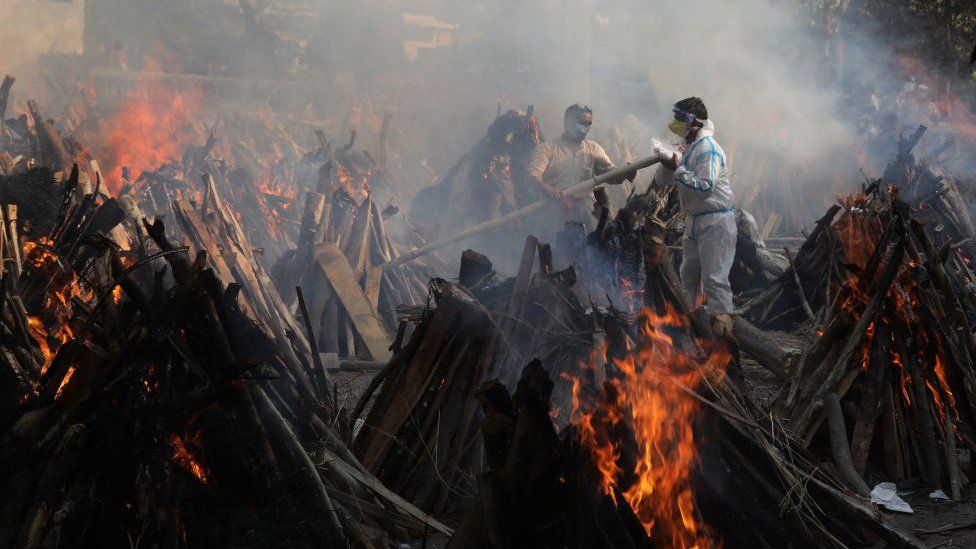
A senior official from the hospital told the BBC that out of its 220 doctors, 40 had tested positive in the past 10 days and four of them died. This has added to the pressure on the hospital.
Aurangabad district in the west of the state is also badly hit. It has recorded more than 5,000 cases since 5 April, and six people died in the same period, according to official data. But senior journalists in the state say the actual numbers are higher as testing is a major problem in smaller towns and cities. Many people become critical and die without ever being able to get tested for Covid-19. Such deaths don't go into official data.
Sumitra Devi struggled to get a test done in Aurangabad. She couldn't get an RT-PCR test done for days as her condition continued to worsen. Hospitals refused to admit her without a positive test result.
So her family took her to a small private hospital in a nearby district where she tested positive, but the hospital said she was critical and they didn't have facilities to treat her. The family then took her to a big hospital in the state's capital Patna where she was made to wait for several hours before she could be admitted.
She died two hours after finding a bed.
Nainital, Uttarakhand state
The tourist district in the Himalayas is struggling to cope with the rising number of cases. At least 131 out of its 142 ICU beds were occupied on 27 April and only 10 out of its 771 oxygen beds were free.
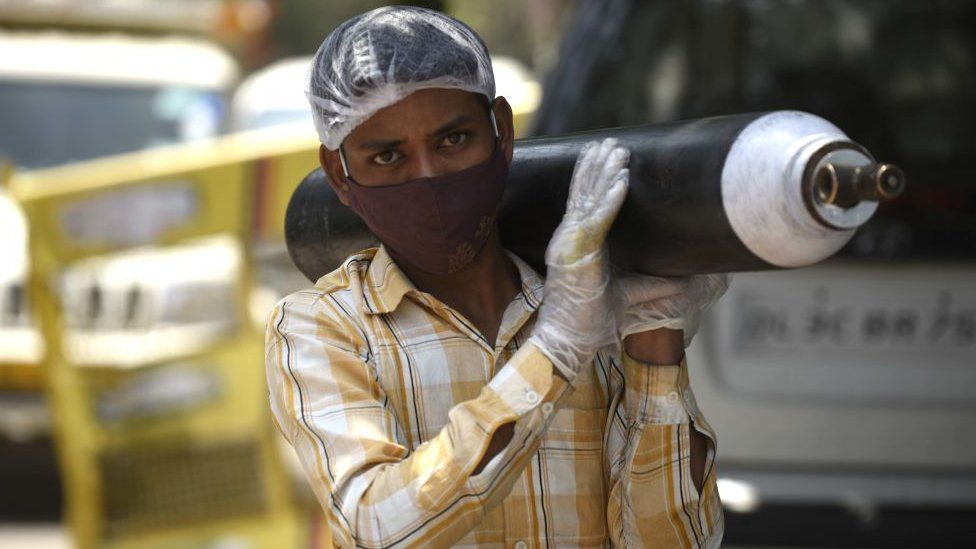
It has reported more than 4,000 cases and 82 deaths in the past week. The district is particularly finding it difficult to handle the rise because it also receives patients from remote towns and villages where healthcare facilities are negligible.
A local doctor, who did not wish to be identified, said "the situation was dire and he was terrified".
"We are in this situation because the government didn't plan to augment facilities in remote areas. I am worried that many people in remote Himalayan areas will die and we will never hear about them. They will never show up in statistics."
Post a Comment